Series 1, Article 5 of 8 — Charity Data Analytics for ICB Commissioners
What is health charity equity data and why is it now central to ICB commissioning decisions?
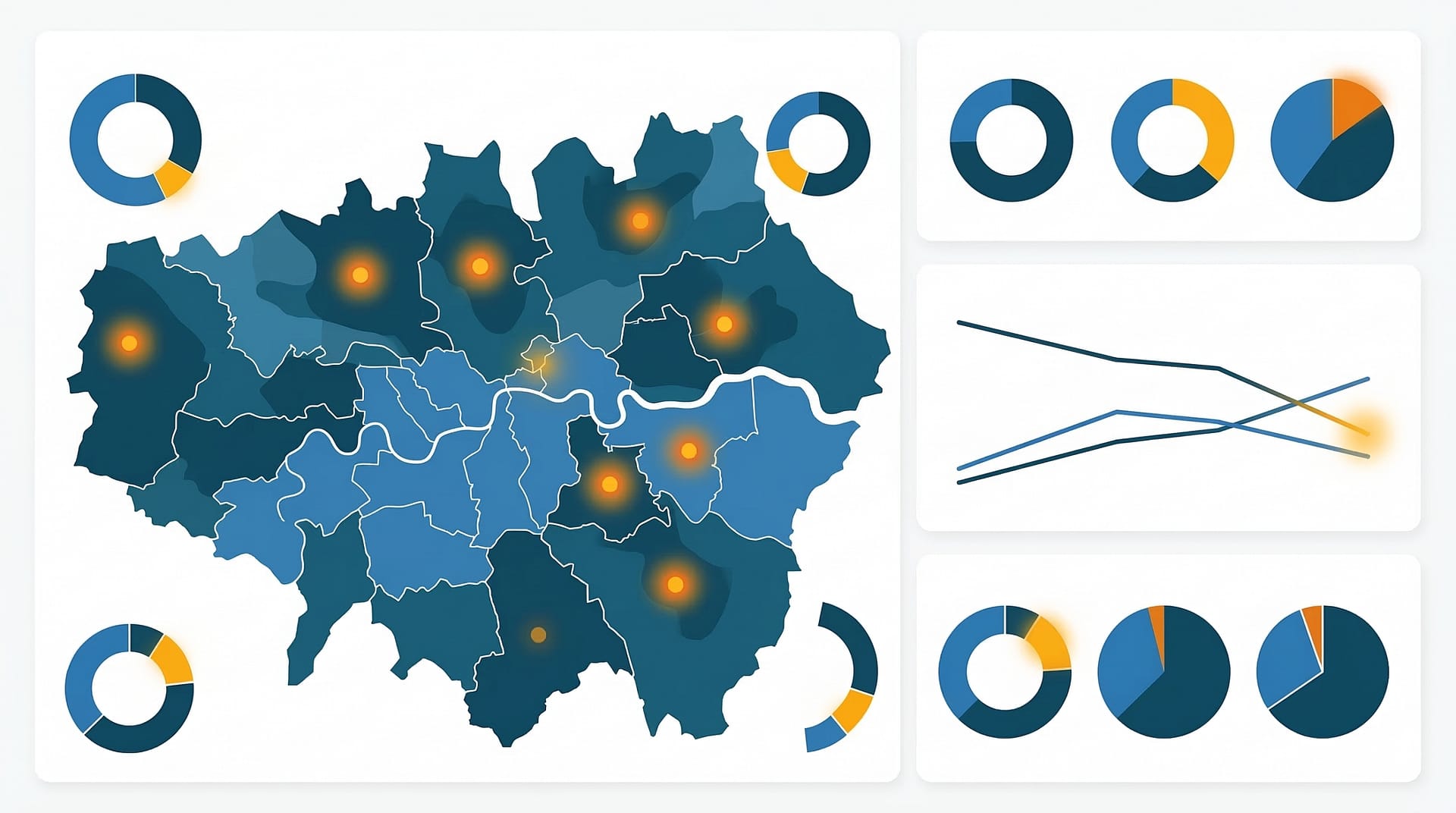
Health charity equity data reporting is the systematic collection, analysis, and presentation of demographic and geographic information about who is and is not accessing your service — and whether outcomes differ systematically between population groups. The 2026 NHS Strategic Commissioning Framework places tackling health inequalities at the heart of ICB accountability. For VCSE providers, this means that demographic completeness and equity of access are no longer background considerations — they are primary evidence requirements that can determine whether a contract is renewed, expanded, or put out to competitive tender.
This is Article 5 of our eight-part series on charity data analytics for ICB commissioners. Previous articles covered performance KPIs, productivity, outcomes and PROMs, and impact measurement.
What equity KPIs do ICB commissioners expect VCSE providers to report?
Demographic completeness is the starting point. Commissioners cannot assess equity of access if your data has high rates of missing ethnicity, postcode, age, or sex fields. A demographic completeness rate below 80% on core fields signals to commissioners that your equity analysis is unreliable, regardless of how positive your headline numbers appear.
Access equity indicators reveal whether different population groups are reaching your service at rates consistent with their prevalence in the local population. Service users by demographic group compared against local population benchmarks from ONS or ICB population health data will reveal whether your service is systematically under-reaching specific communities. Geographic coverage analysis using postcode data and deprivation band mapping adds a place-based dimension to this picture.
Engagement equity indicators go deeper than access. DNA rates, drop-off rates before treatment, and cancellation rates split by demographic group reveal whether certain populations are systematically disengaging — pointing to service design or accessibility issues that commissioners will expect to see acknowledged and addressed.
Outcome equity indicators are the most sophisticated level. Splitting PROM change scores and wellbeing gains by demographic group reveals whether your service is achieving equitable outcomes or whether certain groups are benefiting less than others. The inequality gap metric — the difference between the best-performing and worst-performing demographic groups over time — gives commissioners a single number capturing your equity trajectory.
Why do most health charities fail on equity reporting and how can you fix it?
The most common failure is structural. Demographic data is collected inconsistently at the point of referral, often in free text fields, with collection rates varying by clinician and referral route. By the time a commissioner asks for an ethnicity breakdown of outcomes, the data simply is not there in a usable form.
The fix requires structured demographic data collection embedded into the referral and registration process — using drop-down categories aligned with the ONS ethnicity classification. Postcode data must be systematically collected and linked to deprivation indices so that geographic equity analysis is possible without manual lookups.
Once structured demographic data is flowing consistently, a Power BI equity dashboard can automatically generate demographic breakdowns, deprivation profiles, and outcome equity splits. Our charity analytics programme includes equity reporting as a core module.
Frequently asked questions
What demographic fields are considered essential for ICB equity reporting?
The minimum expected fields are age, sex, ethnicity using ONS 18+1 categories, and postcode. Additional fields that strengthen equity reporting include disability status, primary language, and referral source.
How do you calculate deprivation band for charity equity reporting?
Deprivation band is derived from postcode data using the Index of Multiple Deprivation, which assigns each Lower Super Output Area a deprivation decile from 1 (most deprived) to 10 (least deprived). This lookup can be automated in Power BI using the published ONS IMD dataset.
What is an under-served pocket and how do you identify one?
An under-served pocket is a geographic area or demographic group where the proportion of your service users is significantly lower than their share of the local population or their estimated prevalence of need.
Do small charities need to report outcome equity data to commissioners?
Yes — though proportionate to caseload size. A small charity with 50 active cases cannot meaningfully split outcomes by six ethnic groups. However, reporting a majority versus minority split, alongside an honest narrative about data limitations, demonstrates analytical awareness that commissioners value over silence.
Need Commissioner-Ready Reports Your Funders Will Trust?

Mohsin Farhat
AI & Data Analytics Leader | 15+ years in Data Analytics, Automation & Decision Intelligence | Healthcare • NHS • Public & Private Sector
Connect on LinkedIn